Progesterone for Sleep: How Oral Progesterone Treats Menopause Insomnia

Reviewed by the ClearedRx Medical Network · Last updated May 7, 2026
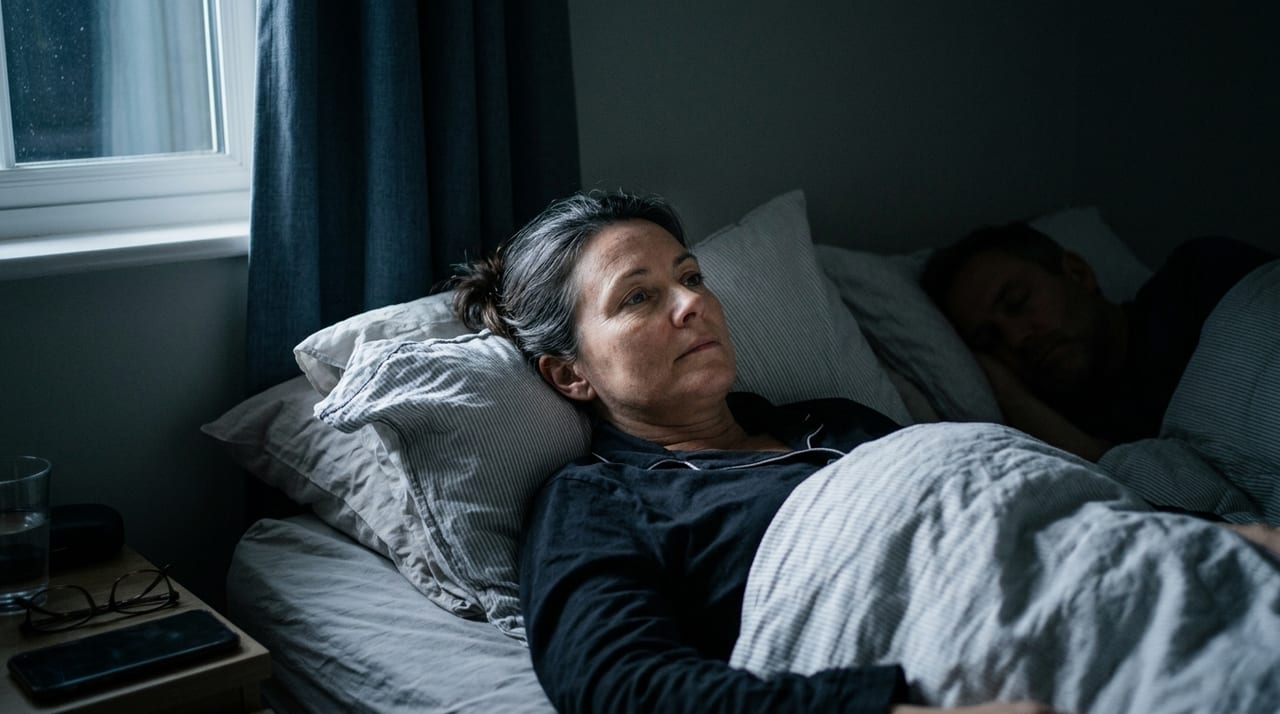
If you're reading this at 3:14 AM with a partner snoring beside you — hi. We see you. An hour ago you were asleep. Now your brain is racing through tomorrow's calendar, last week's argument, and an anxiety you can't even name. You're not broken. This isn't "just stress." For most women in perimenopause and menopause, the 3 AM wake-up is a hormonal event — and the most underrated fix is a single bedtime capsule of oral progesterone.
This guide covers what's happening inside your brain when progesterone drops, why oral progesterone at bedtime works when creams don't, the standard 100 mg and 200 mg doses, the side effects to expect, and when to add estrogen for full sleep recovery.
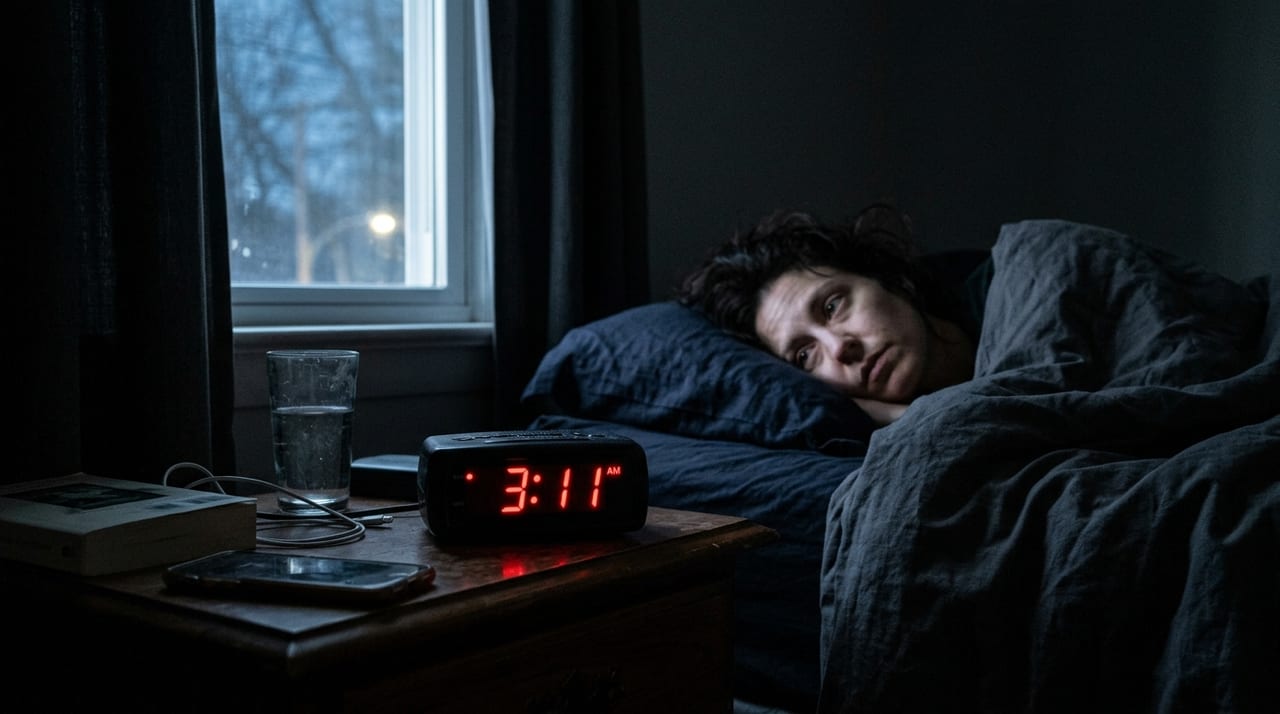
"Your liver turns oral progesterone into allopregnanolone — a calm-down molecule that hits the same brain switch as Xanax, but gentler." — ClearedRx Medical Network
Why menopause wrecks your sleep
Sleep isn't one thing. A healthy night cycles through four stages — light sleep, deep sleep, and REM — about every 90 minutes. Deep sleep dominates the first half of the night. That's when your body repairs tissue, locks in memory, and turns down stress hormones. REM clusters later and processes emotion.
Two hormone shifts during menopause break this rhythm:
- Estrogen drops, and your thermostat goes haywire. Falling estrogen narrows the temperature window your brain considers "comfortable." A tiny uptick in body heat now triggers a full hot flash. At night, those flashes wake you up in micro-bursts you barely remember — but they shred your deep sleep all the same. That's why you can spend 8 hours in bed and still feel hit by a truck.
- Progesterone drops, and your brain loses its calm-down switch. Your body uses progesterone to make a molecule called allopregnanolone — a natural sedative that quiets your nervous system. As progesterone falls in perimenopause and crashes in menopause, that brake comes off. Waking up wired at 3 AM is the predictable result.
The long-running SWAN study (Study of Women's Health Across the Nation) confirms what you already know: sleep complaints spike in late perimenopause and stay high for years — even when the hot flashes ease. The Mayo Clinic menopause overview describes the same pattern. Two different problems, one wrecked night.
How progesterone calms your brain
Here's the part most articles skip. When you swallow an oral progesterone capsule (the brand name is Prometrium — ClearedRx prescribes both brand and generic), it passes through your stomach into your liver. Your liver does something the cream can't: it breaks the progesterone down into a molecule called allopregnanolone. (Pronounced *al-low-PREG-nan-uh-lone*.)
That molecule binds to the same brain switch as anti-anxiety meds and even alcohol — but gentler, and without the next-day fog. It's the brain's "calm down" switch, and your body has been making this exact molecule for decades. There's nothing foreign for your brain to fight off. That's why the right dose of progesterone at bedtime works.
Once that switch flips, three things happen:
- You fall asleep faster.
- Your deep sleep gets deeper and longer — the kind that actually repairs you.
- The 3 AM cortisol spike that hijacks your brain at night gets quieter.
Younger women feel this every month. Allopregnanolone peaks the week before a period — which is why some women in their 20s and 30s feel sleepy and calm right before they bleed. Perimenopause flattens that peak. Replacement progesterone brings it back.

Why bedtime — not morning
The calm-down molecule peaks 1 to 3 hours after you take the capsule, then fades over the next 6 to 8. That curve is the whole reason for bedtime dosing.
Take progesterone in the morning, and the peak hits at lunch — when you need to focus, not nap. By the time you actually want to sleep, it's already worn off. Take it at bedtime instead, and the peak lands right at sleep onset. The strongest calming effect covers the first half of the night, exactly when deep sleep matters most.
Most prescribers tell you to take it 1 to 2 hours before lights out, with or without food. Some women do better with a light snack to soften morning grogginess. Others prefer an empty stomach for faster onset. Either works.
How much progesterone for sleep? The standard doses
Oral progesterone comes in two standard strengths: 100 mg and 200 mg.
| Dose | Typical use | What to expect |
|---|---|---|
| 100 mg nightly | Starting dose for most women on continuous HRT. Mild-to-moderate insomnia. | You'll fall asleep faster within the first week. Protects your uterine lining if you're also using estrogen. |
| 200 mg nightly | Cyclic HRT (200 mg for 12 days a month), or when 100 mg didn't move the needle after 2 to 4 weeks. | Stronger sleep effect. Slightly higher chance of morning grogginess. |
| Above 200 mg | Rarely useful, and not recommended for sleep alone. | Diminishing returns; more side effects. |
The 2022 NAMS Hormone Therapy Position Statement calls oral micronized progesterone the preferred form for women with a uterus on combined HRT. It has fewer side effects than synthetic progestins (the lab-made cousins of progesterone), and the sleep benefit is a real bonus.
Your starting dose depends on whether you have a uterus, whether you're also taking estrogen, and how rough your sleep is. A ClearedRx prescriber sets it. See our progesterone tablets page for current pricing.
When progesterone alone isn't enough: add estrogen
Progesterone fixes the calm-down brake. It does not fix hot flashes. If you're waking up in a soaked nightshirt with your heart pounding at 2 AM, that's a different problem — and the cleanest fix is to add a low-dose estradiol patch on top of your bedtime progesterone.
Most ClearedRx patients end up here:
- Estradiol patch (often 0.05 mg/day, changed twice a week) to shut down hot flashes and night sweats.
- Oral progesterone (100 mg or 200 mg) taken 1 to 2 hours before bed to bring back deep sleep and protect your uterine lining.
Many menopause specialists call this combo the closest replica of how your body worked in your 30s. The patch puts estrogen straight into your bloodstream and skips the liver (no clot-risk bump). The capsule uses the liver to your advantage. For more on the different forms, see our guide to all six types of HRT.

Side effects to know about
Oral progesterone is well-tolerated for most women, but the calm-down effect that helps at night can sometimes spill into the morning. The most common side effects, roughly in order:
- Morning grogginess — most common in the first 1 to 2 weeks. It usually fades as your body adjusts. Fix: take it earlier (8 or 9 PM instead of 11 PM) and stand up slowly.
- Lightheadedness when you stand up — mostly first thing in the morning. Sit on the bed edge for 30 seconds before you stand.
- Mild headache or breast tenderness — usually settles within a month.
- Mood changes — uncommon but real. A small group of women feel low or weepy on progesterone. If it lasts past 4 weeks, talk to your prescriber about dose, timing, or a different option.
- Peanut allergy — already covered above. Generic micronized progesterone in a different oil base is the standard fix.
Oral progesterone isn't right for everyone. Active liver disease, current breast cancer, unexplained vaginal bleeding, recent stroke or blood clot, and pregnancy are the main reasons HRT isn't right for you. The ACOG clinical guidance library spells out the full list. A ClearedRx prescriber reviews your full history before writing anything.

When progesterone isn't enough: what comes next
You've been on 200 mg of bedtime progesterone for 6 to 8 weeks and your sleep is still wrecked. Before you walk away from HRT, two things to check:
- Are hot flashes the real problem? If you're waking up hot or sweating, that's an estrogen issue, not a progesterone issue. Adding a transdermal estradiol patch is the next move.
- Could it be something else? Sleep apnea is the most-missed driver of midlife insomnia — and no hormone fixes it. Thyroid problems, low iron (restless legs), and depression also cause 3 AM wake-ups that won't budge with progesterone. The NIH health-information library covers each of these. A good prescriber screens for them before bumping your hormone dose.
If you're still cycling, see our guide on perimenopause vs. menopause. Sleep symptoms behave differently in early perimenopause than after your last period — and the dosing reflects that.
Common questions about progesterone and sleep
Does progesterone really help you sleep?
Yes. Your liver turns oral progesterone into allopregnanolone — a calm-down molecule that hits the same brain switch as anti-anxiety meds, but through a natural pathway your body has used for decades. Most women fall asleep faster within the first week of bedtime dosing.
How much progesterone should I take for sleep?
The two standard doses are 100 mg and 200 mg, taken 1 to 2 hours before bed. Most prescribers start at 100 mg. If your sleep hasn't improved after 2 to 4 weeks, the dose often goes up to 200 mg. Above 200 mg is rarely useful and tends to leave you groggy the next morning.
Why take progesterone at night, not in the morning?
The calm-down molecule peaks 1 to 3 hours after you take the capsule. Bedtime dosing puts that peak right at sleep onset. Take it in the morning, and the peak hits at lunch — when you need to focus, not nap — and it's worn off by the time you actually try to sleep.
Will progesterone cream help me sleep?
Probably not. Cream skips your liver, and the liver is what turns progesterone into the calming molecule. Cream can still offer some uterine protection at high enough doses, but it doesn't move the sleep needle the way the capsule does.
What are the side effects of oral progesterone?
The most common ones are morning grogginess, lightheadedness when you stand up, and a mild headache during the first 1 to 2 weeks. These usually fade as your body adjusts. Take the dose at bedtime and stand up slowly in the morning. A small group of women feel low or weepy on progesterone — talk to your prescriber if that happens.
Can I take progesterone for sleep if I don't have a uterus?
Yes. Women without a uterus don't need progesterone to protect the uterine lining, but it's still prescribed for sleep, anxiety, and overall HRT balance. Your doctor will review your history and decide.
Is progesterone for sleep covered by insurance?
Brand-name Prometrium is usually covered with prior authorization. Generic micronized progesterone is widely covered at low copays. ClearedRx ships generic direct from US-licensed pharmacies starting at $19 the first month, then $39/month ongoing — no insurance hoops required.
Tired of waking up at 3 AM?
A doctor will review your sleep history, hot-flash pattern, and overall hormone profile, then prescribe the right form of progesterone if it fits. Most women on bedtime oral progesterone fall asleep faster within the first week. Plans from $39/mo ($19 first month)nth, prescribed and shipped from US pharmacies.
Tell a Doctor About My Sleep