Types of HRT Explained: Patches, Creams, Pills & Rings

Reviewed by the ClearedRx Medical Network · Last updated May 7, 2026

Same hormone. Three different delivery methods. One can double your blood-clot risk. Another barely budges it. Estrogen taken as a daily pill raises your risk of a blood clot in a vein roughly two-fold. The same dose absorbed through a skin patch? No measurable bump. That one fact is why most major medical societies now list through-the-skin HRT as the first choice for healthy women under 60. Below: every route compared, brand examples, dose ranges, and the one delivery method we won't prescribe at all.
The 6 main types of HRT, compared
Hormone replacement therapy isn't one product. It's a family of them. Estrogen and progesterone each come in several forms, and how you take them matters as much as the dose. The table below shows the six common types side by side. How often you use each one. Whether it goes through the liver. Clot risk. What it treats best.
| Route | Frequency | First-pass liver? | Clot risk vs. oral | Best for | Common brands |
|---|---|---|---|---|---|
| Patch (through-the-skin) | 1–2× per week | No | No increase | Hot flashes, night sweats; women with clot risk | Climara, Vivelle-Dot, Minivelle |
| Gel (through-the-skin) | Daily | No | No increase | Patch-irritated skin; women who want fine dose control | EstroGel, Divigel, Elestrin |
| Body cream (through-the-skin) | Daily | No | No increase | Combined estrogen + progesterone in one rub-on dose | Compounded BHRT |
| Tablet (oral pill) | Daily | Yes | ~2× higher | Sleep (oral progesterone); women without clot risk | Estrace, Premarin, Prometrium |
| Vaginal cream / tablet | 2–3× per week | Local only | No bloodstream effect | Vaginal dryness, painful sex, repeat UTIs | Estrace cream, Vagifem, Imvexxy |
| Vaginal ring | Every 90 days | Local only (low-dose) | No bloodstream effect (Estring) | Set-and-forget vaginal symptom relief | Estring, Femring |
"Same hormone. Three delivery methods. One can double your clot risk. Another barely budges it." — ClearedRx Medical Network

Through-the-skin HRT: patches, gels, and creams
"Transdermal" means through the skin. The hormone soaks in and goes straight into your bloodstream — without stopping at the liver first. The 2022 NAMS Hormone Therapy Position Statement and the Endocrine Society both list transdermal estrogen (patches, gels, and creams) as the preferred route for most women starting HRT.
Why most doctors start with the patch
An estrogen pill takes a detour through your liver before it reaches the rest of your body. Your liver responds by cranking out more clotting factors. That's the part that worries doctors. A patch skips the liver entirely. The clinical bottom line: oral estrogen roughly doubles your risk of a blood clot in a vein. The patch does not (BMJ 2022 reread).
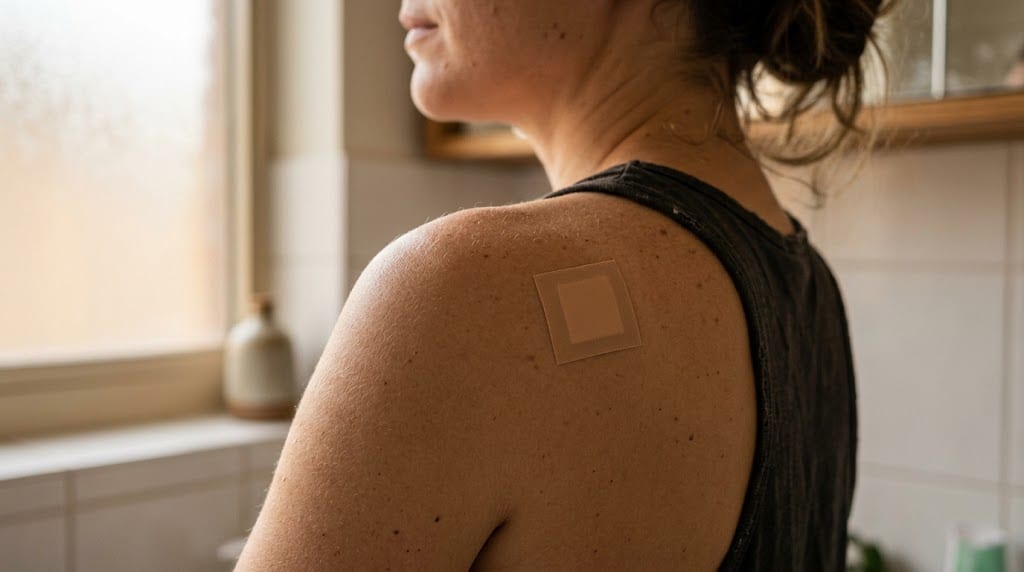
- Patches. A small sticker you wear for 3.5 to 7 days at a time, depending on the brand. Steady estradiol absorption, no daily routine. Standard doses run 0.025 to 0.1 mg per day. About 1 in 6 users get some skin irritation from the adhesive — rotating sites helps. See our estradiol patches and low-dose estradiol patches.
- Gels. A pump or pre-measured packet you rub on your inner forearm or thigh once a day. Dries in minutes. No sticker, no irritation. Easy to adjust the dose up or down. The trade-off: you have to remember it daily, and you can't wash or touch the area for an hour. See our estradiol gel.
- Body creams. Rubbed in daily, usually on the inner thigh or upper arm. Creams can combine estrogen and progesterone in one custom mix — convenient if you need both. Our 3-in-1 HRT body cream packs estradiol, estriol, and progesterone into one daily rub.
Oral HRT: tablets and pills
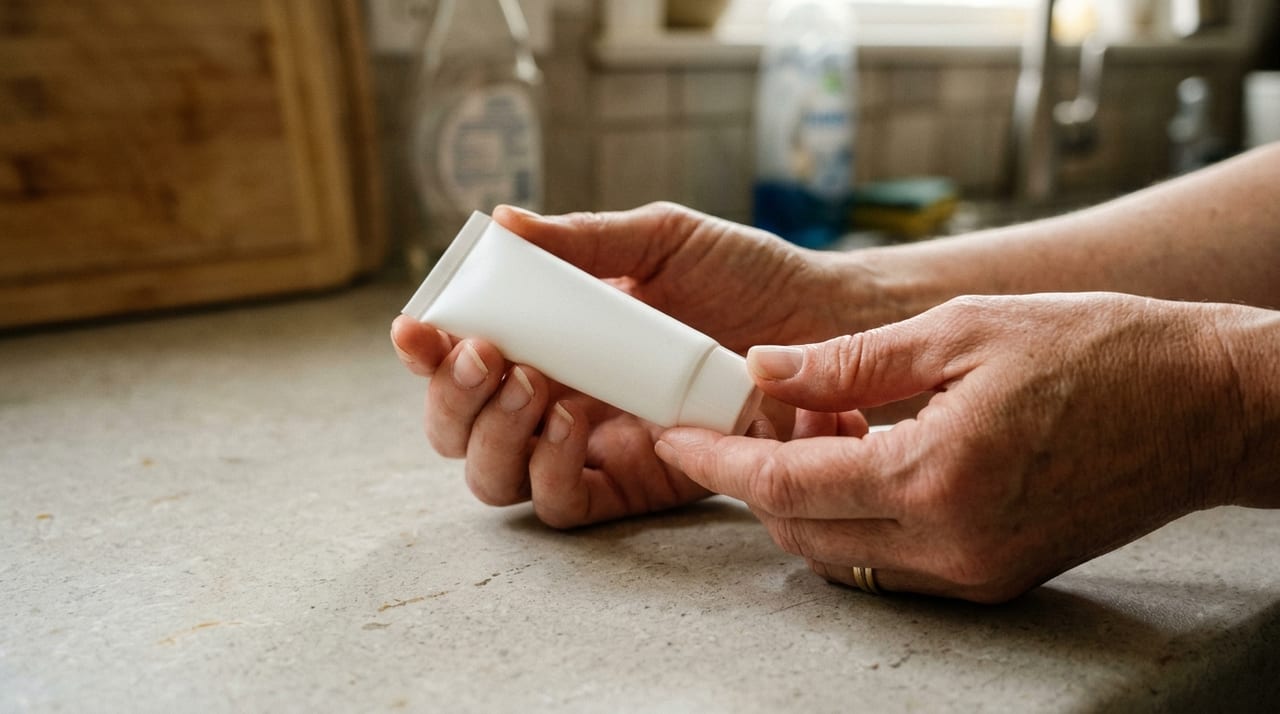
You swallow a pill. It travels through your gut, then your liver, before reaching the rest of your body. For estrogen, this is the route most likely to raise clotting risk. Doctors usually skip it for women over 60, smokers, or anyone with a history of blood clots, migraine with aura, or liver disease.
- Oral estradiol (usually 0.5–2 mg a day) works for hot flashes and bone protection. It's not first-line per current NAMS guidance, but it's reasonable if you have no clot risk and prefer a daily pill. See our estradiol tablets.
- Oral micronized progesterone (100–200 mg at bedtime) — micronized just means broken into tiny particles your body absorbs better. This is the rare case where the pill form is the better choice. Why? When the pill passes through your liver, a portion gets converted into a calming molecule called allopregnanolone. That molecule flips your brain's "calm down" switch — the same switch anti-anxiety meds use, but gentler. That's why doctors pick the oral form for women whose worst menopause symptom is insomnia. We dig into the mechanism in why progesterone is the secret to better sleep. See our progesterone tablets.
Vaginal HRT: creams, tablets, and rings
Vaginal estrogen is a local treatment. You apply it right where you need it. The estrogen restores the tissue without flooding your bloodstream — blood levels stay under 10 pg/mL with low-dose vaginal forms. That's well below the level a younger woman has naturally.
Local vaginal estrogen is the most effective fix for vaginal dryness, painful sex, urinary urgency, and repeat UTIs (sometimes called genitourinary syndrome of menopause, or GSM). Because it stays local, the American College of Obstetricians and Gynecologists says it's safe even for many women who can't take regular HRT. We dig deeper in our vaginal dryness treatment guide.
- Vaginal cream — used 2 to 3 times a week with a measured applicator after an initial loading phase. Easiest to fine-tune. See our estradiol vaginal cream and the 3-in-1 HRT vaginal cream.
- Vaginal ring — a soft, flexible silicone ring you insert yourself every 90 days. Set it and forget it. Many patients love it once they get past the first insertion. Estring delivers a low local dose. Femring delivers a full HRT-level dose. See our Estring vaginal ring.
What about hormone pellets and injections?
You'll see two more routes advertised — usually by clinics that brand themselves around "BHRT" pellets and shots. We don't prescribe pellets. Here's why the major medical societies don't either.
Hormone pellets are tiny custom-made rice-sized implants pushed under the skin of your hip. They sit there for 3 to 6 months. They aren't FDA-approved. And they regularly push your hormone levels two to ten times above what a healthy 30-year-old has naturally. Worst part: once they're in, they can't come out. If you get side effects, you wait it out for months. The North American Menopause Society, the Endocrine Society, and the International Menopause Society all explicitly recommend against pellets.
Estrogen injections (usually estradiol valerate or cypionate) get used in some specialty cases. Most women in menopause hate them. They produce sharp peaks and crashes that feel awful. Not standard care.
The "gold standard" combo
If you have your uterus and you want relief from hot flashes plus better sleep, here's what most NAMS-trained doctors prescribe first:
- An estradiol patch (or gel or cream) applied in the morning. Treats hot flashes and night sweats. Protects your bones. No clot risk bump.
- One oral progesterone capsule (100 mg) at bedtime. Protects your uterine lining (a must if you have a uterus and take estrogen) and gives you a mild calming effect that helps you actually fall asleep.
- Optional: low-dose vaginal estrogen 2 to 3 times a week if you have dryness or painful sex. It's local-only and stacks safely on top of the rest.
For why this combo is considered safer than the older WHI-era version (estrogen made from horse urine plus a synthetic progestin), read our deep dive on HRT safety and the WHI reread.
How to pick the right route for you
Four questions usually narrow it down fast:
- Any clot or stroke risk factors? Past blood clot, smoker, migraine with aura, BMI over 30. If yes, the patch wins.
- Is sleep your worst symptom? Add oral progesterone at bedtime no matter which estrogen form you pick.
- Vaginal symptoms worse than hot flashes? Local vaginal estrogen alone may be all you need. No full HRT required.
- How are you with daily routines? A patch (1–2 times a week) and a 90-day ring are forgiving. Daily gels and creams need consistency.
None of this is permanent. If your first plan doesn't feel right after 8 to 12 weeks, switching is easy — and we encourage it. Our consultation process builds in a follow-up to fine-tune your route.
Common questions about HRT delivery methods
Is the HRT patch better than the pill?
For most women, yes. NAMS and the Endocrine Society both list the patch (and other through-the-skin forms) as first-line. It skips the liver, so it doesn't raise your risk of blood clots, stroke, or gallbladder problems the way the pill does. The pill is still fine for some women who tolerate it well and have no clot risk.
Can I switch HRT types if one doesn't work?
Yes. Switching is common and safe. A ClearedRx clinician can move you from a patch to a cream, from a pill to a patch, or change your progesterone form — usually within one cycle. Most switches take 2 to 4 weeks to settle.
What if my skin reacts to the patch adhesive?
About 1 in 6 patch users get some skin irritation. The fix: switch to a gel or body cream. Same active hormone, no sticker. For milder cases, rotate where you put the patch and apply only to dry, lotion-free skin.
Why doesn't ClearedRx prescribe hormone pellets?
Pellets aren't FDA-approved. They regularly push your hormones way above the level a younger woman has naturally. Once they're in, they can't come out. NAMS, the Endocrine Society, and ACOG all advise against them. We stick with FDA-approved active ingredients in forms where the dose can be adjusted.
Do I need progesterone if I have a uterus?
Yes. Taking estrogen alone makes your uterine lining thicken, and over time that raises your risk of uterine cancer. Progesterone protects the lining. If you've had your uterus removed, you usually take estrogen alone.
What if I can't take HRT — are there other options?
Yes. For hot flashes and night sweats, low-dose SSRIs and SNRIs (like escitalopram), gabapentin, and the newer non-hormone drug fezolinetant (Veozah) all have real evidence. They aren't as strong as HRT for severe symptoms, but they're solid options for women who can't take hormones.
Not sure which form is right for you?
Tell us your symptoms and your history. A ClearedRx doctor will recommend the safest route for you — patch, cream, pill, or vaginal — within 24 to 48 hours. No video call needed.
Get My Recommended Route